





















Ultrasound Basics: Structure and Working Principle of the Probe
The Structure of the Ultrasound Probe
An ultrasound probe is mainly composed of materials such as piezoelectric crystals, sound-absorbing materials, acoustic lenses, matching layers, cable connectors and housings, among which piezoelectric crystals are the most important components.
Piezoelectric Crystals: Mainly convert electrical signals into ultrasonic waves during transmission, and convert ultrasonic waves into electrical signals during reception.
Sound-Absorbing Materials: Function to absorb the ultrasound radiated from the back of the crystal, reduce or eliminate interference caused by multiple reflections of ultrasound between the two ends of the crystal; increase crystal damping to narrow the emission pulse, thereby improving resolution.
Acoustic Lens: (Transverse/longitudinal axis) Axial focusing.
Matching Layer: Its main function is to allow the ultrasound radiated by the crystal to effectively enter the human body, enabling the examination of human tissues. It achieves acoustic impedance matching between the transducer and the human body.
Cable Connector: Connects the probe and the main unit.
Protective Layer and
Housing: Used to protect the internal structure.
Probe-Related Parameters
Element: The piezoelectric crystal at the head of the probe is evenly cut into several parts, each of which is the smallest unit that can independently transmit and receive ultrasonic waves, called an element. The more elements there are, the better the image quality.
Frequency: The center frequency of the ultrasonic waves emitted by the probe, measured in megahertz (MHz). The higher the frequency, the better the image resolution, but the weaker the penetration.
Bandwidth: The frequency band width of the echo signals that the probe can receive. The wider the bandwidth, the more signals can be received, and the more diagnostic information is provided to the doctor.
Curvature Radius: The elements of the convex array probe are arranged in an arc-shaped curve. The rotation rate of the tangent direction angle of a certain point on the curve relative to the arc length is called curvature, which is defined by differentiating 1 element, indicating the degree of deviation of the curve from the straight line (tangent point). The curvature radius is one of the indicators describing the size of the convex array probe. The smaller the curvature radius, the larger the scanning angle of the probe.
Width: The elements of the linear array probe are arranged in a straight line, and the length of this arrangement is called the width of the linear array probe. The wider the width, the larger the maximum scanning range of the probe; when the number of elements remains unchanged, increasing the width will lead to a decrease in image resolution.
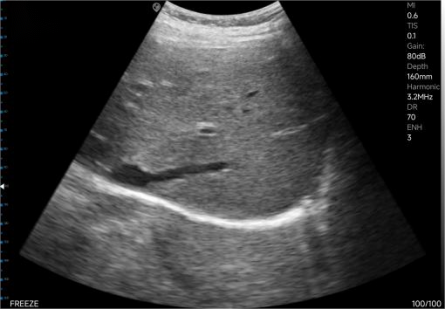
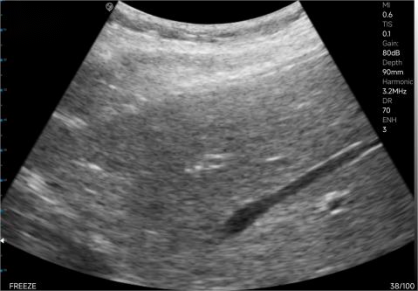
Scanning Field of View: The angle of the fan-shaped image formed when scanning with convex array and phased array probes is called the scanning field of view. The size of the scanning field of view can be adjusted: the larger the scanning field of view, the wider the observation range and the more information obtained, but the slower the frame rate.
What is the piezoelectric effect?
Direct piezoelectric effect: When pressure or tension is applied in a certain direction of some crystals, positive and negative charges will appear on the two surfaces of the crystal respectively, converting mechanical energy into electrical energy. This phenomenon is called the direct piezoelectric effect.
Converse Piezoelectric Effect: When a piezoelectric crystal is placed in an alternating electric field, the crystal will compress or expand along a certain direction, converting electrical energy into mechanical energy. This phenomenon is known as the converse piezoelectric effect.
Probe Working Principle
It utilizes the converse piezoelectric effect to convert electrical energy into mechanical energy (ultrasonic energy) and emit ultrasonic waves. The ultrasonic waves enter human tissues, and the reflected ultrasonic waves (echoes) act on the probe, i.e., high-frequency vibrations (external force) are applied to the piezoelectric crystals, generating high-frequency electrical signals. These signals are received and processed by the ultrasound host and displayed as images on the screen of the ultrasound diagnostic instrument.