













Fundamentals of Ultrasound: Ultrasound Imaging Modes

In the 1950s, Type A and Type M ultrasound were introduced; in the 1970s, Type B ultrasound (commonly known as “B-mode ultrasound”) gradually emerged; in the 1980s, color Doppler ultrasound (colloquially referred to as “color ultrasound”) was developed. Over the past three decades, medical ultrasound diagnostic technology has undergone successive revolutionary leaps and has now become the preferred method for diagnosing various clinical conditions. So, what are the modes of ultrasound?

Amplitude

Type A is an amplitude-modulated type, displaying a curve of amplitude variation over time rather than an image. It quantifies the intensity of tissue echo signals based on amplitude levels, but this method is now rarely used.

Brightness

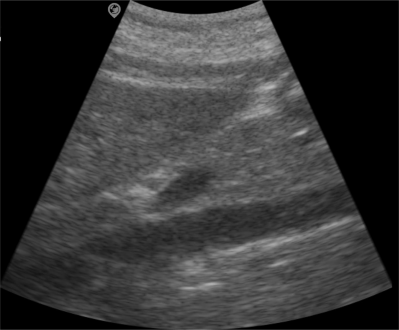
The B-mode is a grayscale-modulated type that displays the intensity of tissue echo signals based on brightness levels, employing a multi-beam scanning method to form a two-dimensional grayscale image from each scan line. B-mode imaging provides two-dimensional cross-sectional views, offering real-time visualization of tissue structures with intuitive presentation. It is widely utilized in the diagnosis of various diseases across multiple clinical fields and remains the most extensively applied modality in current clinical practice.

Motion

The M-mode displays the intensity of tissue echo signals based on brightness levels, while also showing the movement trajectories of these light spots on the time axis, reflecting one-dimensional tissue structure and motion information.

M-mode ultrasound is primarily employed for the examination of the cardiovascular system, analyzing the motion amplitude of the heart and major blood vessels, dynamically assessing the morphological structure and functional status of the cardiovascular system, and obtaining corresponding physiological or pathological technical indicators of the vessels.

color
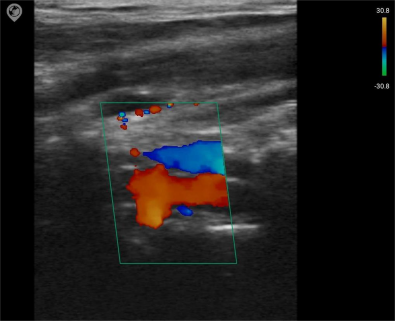
Color Flow Imaging (CFM) overlays real-time color blood flow imaging onto two-dimensional sonograms. Each colored dot represents the mean blood flow velocity within a small region. Different colors indicate variations in blood flow velocity and detection methods, providing an intuitive visualization of hemodynamic states.
Typically, red indicates the direction of blood flow toward the probe, while blue indicates the direction of blood flow away from the probe.

Doppler

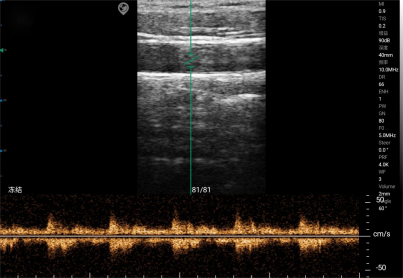
D-mode is a specialized ultrasonic diagnostic method used to detect blood flow and organ activity, also known as Doppler ultrasound. It is clinically employed to assess the hemodynamic status of the heart and blood vessels.
The clinical applications of ultrasound Doppler include pulsed Doppler (PW), continuous wave Doppler (CW), and color Doppler flow imaging (CBFI).

Leave a Reply

Your email address will not be published. Required fields are marked *