





















Top 5 Best Aesthetic Ultrasound Machines for Facial Fillers in 2026
The first thing I look for in an aesthetic ultrasound machine is not the biggest MHz number on the product page. I want to know what happens when the clinic is busy, the injector is trying to find a small vessel, the face is curved instead of flat, and nobody in the room wants to fight with software before the scan even starts.
If you are choosing an ultrasound for facial fillers, facial vascular mapping, skin and subcutaneous layers, biostimulator work, thread lift planning, or post-treatment review, the best device is the one your clinic will actually use every day. In my hands, the most useful machines are the ones that make anatomy easier to read without slowing the appointment down.
Quick answer: for a clinic that wants a dedicated high-frequency aesthetic probe, I would start with SonoMaxx MX8. For a clinic that wants one high-frequency linear probe that can also stretch into deeper aesthetic, MSK, and vascular work, SonoMaxx MX6H is the more flexible choice. Clarius L20 HD3 is the premium competitor I would compare when image quality and a polished wireless ecosystem matter most. Clarius L15 HD3 is easier to live with for many general linear workflows. TodoPocus L20 is a practical value option for buyers who want a familiar aesthetic ultrasound layout without starting at the premium end of the market.
For SonoMaxx’s aesthetic high-frequency line, the relevant conversation is 18/24/24 MHz superficial imaging: skin, scalp, nail, vessel-aware facial work, and the shallow soft-tissue details that aesthetic clinics actually ask me to show them.
My Short List: Which Aesthetic Ultrasound Machine Would I Choose?
If I were helping a clinic owner make the decision quickly, I would separate the question into four real-world situations.
For a facial aesthetics clinic that mostly scans the face, I would choose SonoMaxx MX8 first because the workflow feels focused: superficial layers, small vessels, and high-frequency detail are the center of the device.
For an aesthetic clinic that also does MSK injections, hair restoration, fat transfer assessment, vascular access, or mixed pain procedures, I would choose SonoMaxx MX6H because it is less narrow. It does not feel like a probe you buy for one room and one use case only.
For a clinic with a larger budget that wants a premium wireless system and likes the Clarius app environment, Clarius L20 HD3 is a serious option. It feels like the luxury benchmark in this category.
For a buyer who is comparing value, availability, and a simple aesthetic package, TodoPocus L20 is worth looking at, especially if the clinic is still deciding how often ultrasound will be used.
That is the honest version. The longer version is below.
Top 5 Aesthetic Ultrasound Machines Compared
| Rank | Machine | Where it feels strongest | Frequency positioning | Workflow personality | My buying read |
|---|---|---|---|---|---|
| 1 | SonoMaxx MX8 | Facial aesthetics, superficial vessels, skin layers, fine mapping | 18 MHz class | Focused, clean, face-first | Best dedicated aesthetic pick in this list |
| 2 | SonoMaxx MX6H | Aesthetic clinic plus MSK, vascular, deeper soft-tissue work | 16/20 MHz class | Flexible, practical, clinic-wide | Best if you do more than face-only scanning |
| 3 | Clarius L20 HD3 | Premium ultra-high-frequency wireless imaging | Ultra-high-frequency linear | Polished and premium | Strong image-quality benchmark |
| 4 | Clarius L15 HD3 | General linear work, vascular access, MSK, superficial imaging | High-frequency linear | Easier daily linear workflow | Good if L20 HD3 is more than you need |
| 5 | TodoPocus L20 | Value-focused aesthetic ultrasound comparison | High-frequency linear | Familiar aesthetic workflow | Practical option for price-sensitive buyers |
This table is useful, but it is not how I actually choose a probe in the room. In aesthetic ultrasound, the difference becomes obvious when you start moving across the cheek, nose, lips, temporal region, or jawline. A device can look excellent on a flat phantom and still feel awkward when the probe footprint, weight, app latency, gain controls, and Doppler sensitivity have to work together.
What Matters More Than the Biggest MHz Number
High frequency is important, but MHz alone does not make an aesthetic ultrasound machine good. I care about five things.
First, can I see the superficial layers without constantly changing settings? If I need to adjust too much, the scan becomes a demonstration instead of a clinical habit.
Second, is Doppler easy enough to use during a normal appointment? Facial vessels are not always cooperative. The machine has to make color useful, not decorative.
Third, does the probe sit comfortably on the face? A heavy or awkward probe makes delicate work feel clumsy.
Fourth, can the clinic store and review images in a way that fits the business? Aesthetic practices care about documentation, training, before-and-after review, and consultation confidence.
Fifth, what is the real ownership experience? A lower scanner price can become less attractive if software, membership, device compatibility, storage, or support adds friction later.
This is also why the aesthetic ultrasound literature keeps coming back to the same practical themes: filler location, tissue planes, vascular structures, Doppler, and the difference between seeing anatomy in theory and seeing it clearly enough to act inside a real appointment. That is the lens I use for this comparison.
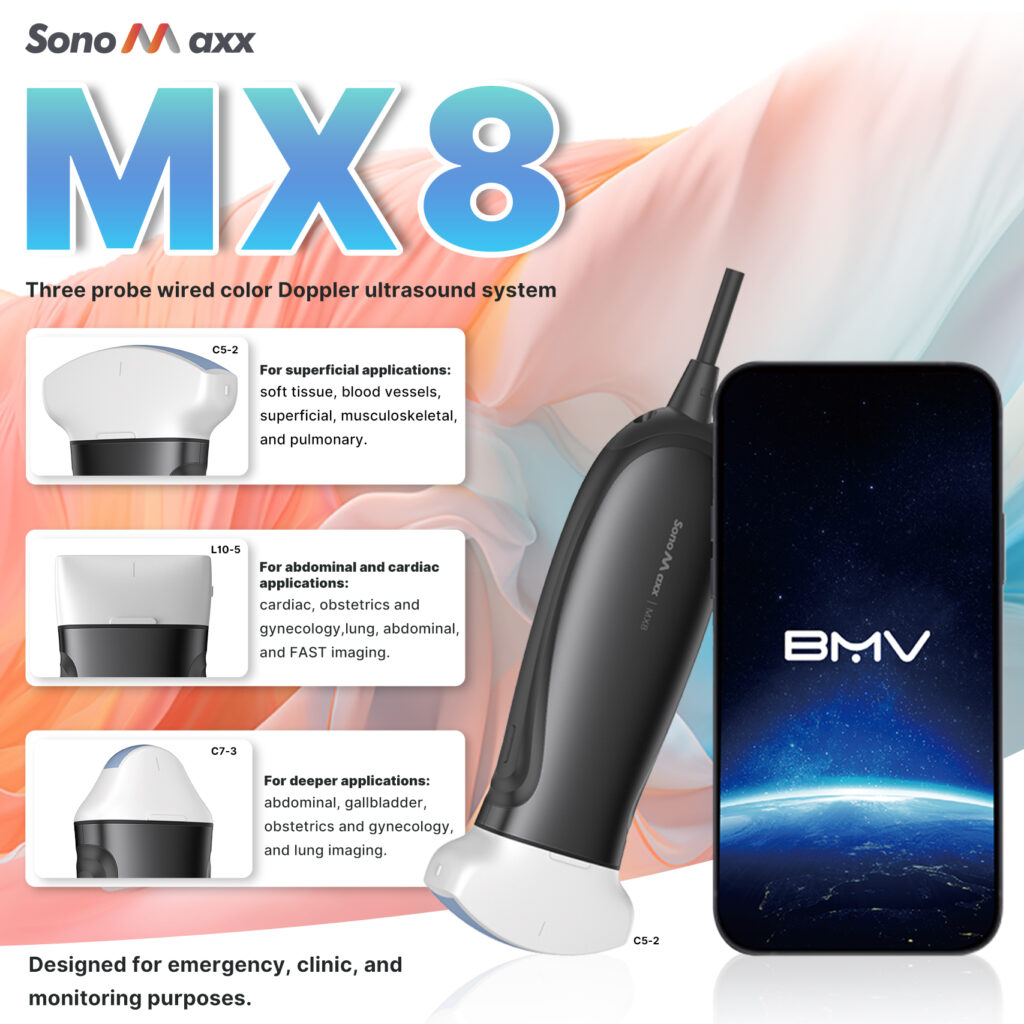
1. SonoMaxx MX8: My Pick for a Dedicated Facial Aesthetics Probe
The SonoMaxx MX8 feels like a probe designed by someone who understands that aesthetic ultrasound is often about shallow detail. The first time I use a device like this, I do not start by looking for a perfect marketing image. I scan slowly over areas where the anatomy changes quickly. I want to see whether the image stays readable as the probe angle changes, whether small superficial structures disappear when I move, and whether the workflow feels calm enough for a clinic assistant or injector to repeat.
That is where the MX8 makes sense. It is not trying to be the one probe for the whole hospital. It feels more like a focused aesthetic instrument: high frequency, superficial depth, linear imaging, and a workflow that belongs in a facial aesthetics room.
What I like most is that the MX8 has a clear personality. In a clinic, that matters. Some devices feel powerful but vague: they can do many things, but the buyer is never quite sure what the device is really for. The MX8 feels easier to explain to a clinic owner: this is the probe for facial mapping, superficial vessels, skin and subcutaneous layers, filler-related review, and high-frequency aesthetic scanning.
The image character I look for in this category is not just sharpness. It is separation. Can I distinguish the layers quickly? Can I keep orientation without staring at the screen too long? The MX8 does well when the clinic’s work is face-centered and detail-heavy.
The demo image I would actually use for this article is not a generic marketing screenshot. In the MX8 Pro set I reviewed, the 18 MHz scalp image is useful because it shows the shallow layers in a way that immediately feels relevant to dermatology and aesthetics. The vertical clips are useful for a different reason: they show the device being used as a moving clinic tool, not as a static brochure image.
Another thing I like is the ownership story. Aesthetic clinics are already paying for lasers, injectables, CRM software, training, photography systems, and sometimes rent in high-cost locations. A device that does not make the buyer explain a complicated software cost every year is easier to approve. The SonoMaxx workflow also helps clinics that do not want to lock themselves into one mobile platform. iOS, Android, and Windows support sounds like a small purchasing detail until the clinic realizes that staff devices are not always standardized.
The MX8 is not the device I would buy for a clinic that only occasionally scans the face and mainly wants a general injection-guidance tool. In that case, I would look closely at the MX6H. But if the clinic is serious about ultrasound as part of its aesthetic identity, the MX8 is the one I would put at the top of the list.
2. SonoMaxx MX6H: The Better Choice When the Clinic Does More Than Face-Only Scanning
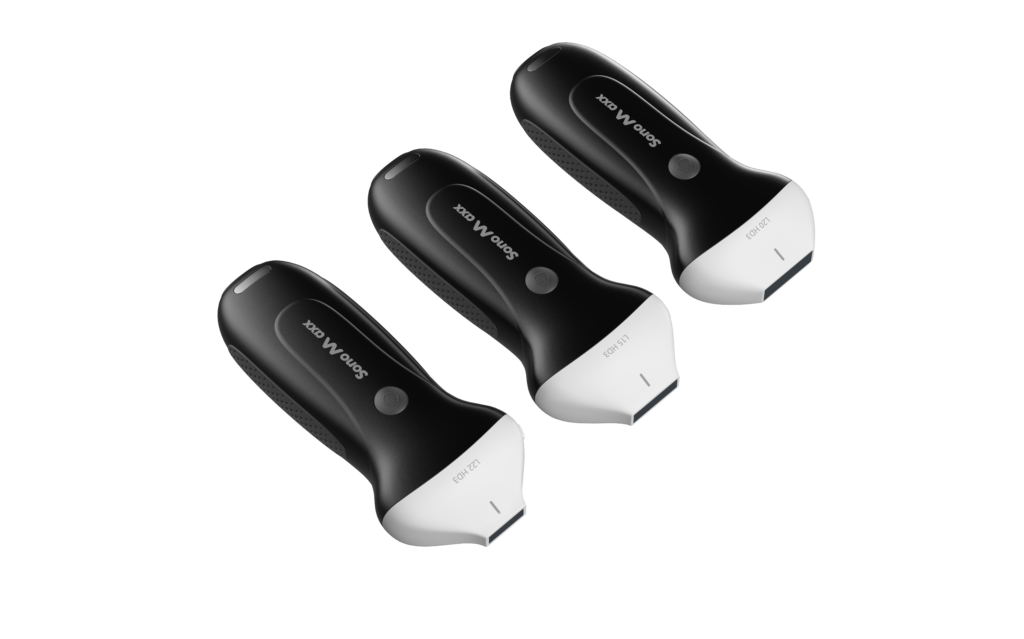
The MX6H is the SonoMaxx probe I would choose when the clinic’s work is broader. Many aesthetic clinics do not live inside one narrow category. The same physician or injector may be thinking about facial filler, under-eye anatomy, jawline work, hair restoration, scar tissue, superficial MSK, pain procedures, vascular access, or post-procedure review. In that type of clinic, a very dedicated facial probe can feel beautiful but slightly boxed in.
The MX6H feels more practical. It still belongs in the aesthetic conversation, but it gives the buyer more room. I think of MX8 as the more refined facial specialist and MX6H as the clinic workhorse.
In actual use, that difference matters. If I am scanning a shallow vessel around the face, I appreciate the high-frequency character. But if the day includes deeper soft-tissue work, a larger treatment area, or a mixed aesthetics/MSK schedule, I do not want to switch mental gears or change devices constantly. Aesthetic practices that grow usually become more complex, not less. They start with filler guidance and later want ultrasound for training, post-treatment review, thread lift planning, edema, nodules, fat layers, or vascular checks. The MX6H gives that clinic more space to grow.
The MX6H also has a psychological advantage for the buyer. It is easier to justify when the device can serve several parts of the clinic. A clinic owner may hesitate to buy a probe that feels useful only for one high-end workflow. A broader linear probe can be easier to put into daily use: one day it helps with facial work, another day with superficial tissue assessment, another day with a training session.
I would not describe the MX6H as less serious than the MX8. It is different. MX8 is the more specialized face-first probe. MX6H is the more flexible clinical tool. If I were buying for a single injector who performs a lot of facial scanning, I would lean MX8. If I were buying for a multi-provider clinic, I would lean MX6H.
MX8 vs MX6H: How I Would Choose Between Them
| Clinic situation | I would lean MX8 | I would lean MX6H |
|---|---|---|
| Mostly facial filler and facial vascular mapping | Yes | Sometimes |
| Skin layer and shallow detail are the main concern | Yes | Sometimes |
| The clinic also does MSK, pain, hair, vascular access, or mixed superficial work | Sometimes | Yes |
| Multiple providers will share the device | Sometimes | Yes |
| The buyer wants the most aesthetic-focused SonoMaxx option | Yes | No |
| The buyer wants one high-frequency linear probe for many clinic workflows | No | Yes |
| The clinic wants the easiest purchasing story around software cost and platform flexibility | Yes | Yes |
This is the part many comparison articles miss. MX6H and MX8 should not be treated as if one simply replaces the other. They solve different clinic problems.
I would rather see a clinic buy the correct probe and use it every week than buy the technically most impressive option and leave it in a drawer.
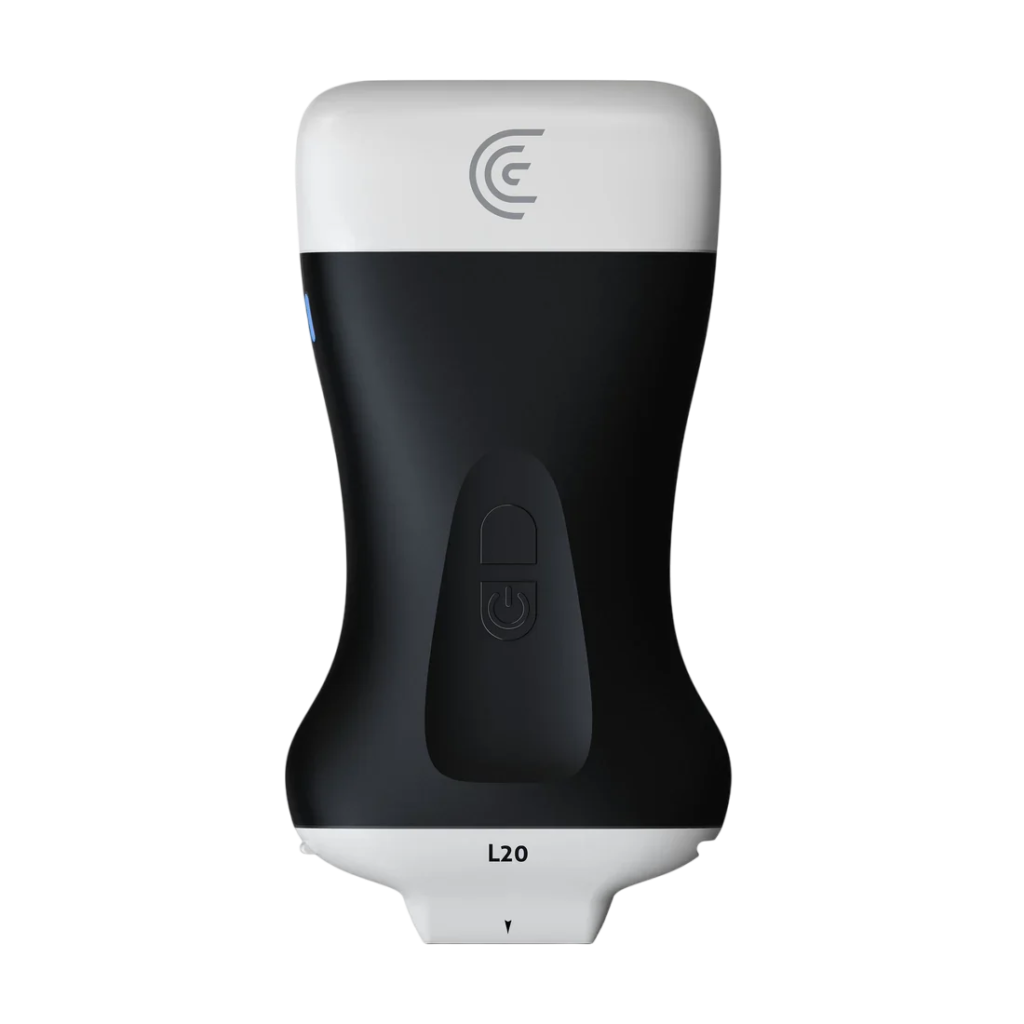
3. Clarius L20 HD3: The Premium Benchmark I Would Compare Against
The Clarius L20 HD3 is the premium competitor in this conversation. I do not say that casually. Clarius has done a good job making handheld ultrasound feel polished: the product photography is strong, the app experience is mature, and the brand has a serious presence in specialty imaging.
When I compare a SonoMaxx aesthetic probe with Clarius L20 HD3, I am not asking, “Which one has the better brochure?” I am asking a more practical question: will the clinic get enough additional value from the premium ecosystem to justify the ownership style?
In many aesthetic clinics, Clarius feels impressive immediately. The wireless design is clean. The scanner looks professional. The app experience is familiar to buyers who already think of Clarius as a premium handheld brand. If a clinic owner wants the most polished premium-feeling option and has the budget for it, the L20 HD3 belongs near the top of the list.
The tradeoff is that premium systems often make the buyer think beyond the scanner price. The official Clarius store listed the L20 HD3 scanner at $5,395 when I reviewed it, with membership options presented on the store page. That does not automatically make it a poor value. In some clinics, the education, app ecosystem, and brand confidence are part of what the buyer is paying for. But it does change the conversation.
For a clinic that wants a premium wireless aesthetic ultrasound and likes the Clarius ecosystem, L20 HD3 is a strong choice. For a clinic that wants high-frequency aesthetic imaging with a simpler ownership story, I would compare it carefully against SonoMaxx MX8 and MX6H before buying.
4. Clarius L15 HD3: The Easier Daily Linear Option
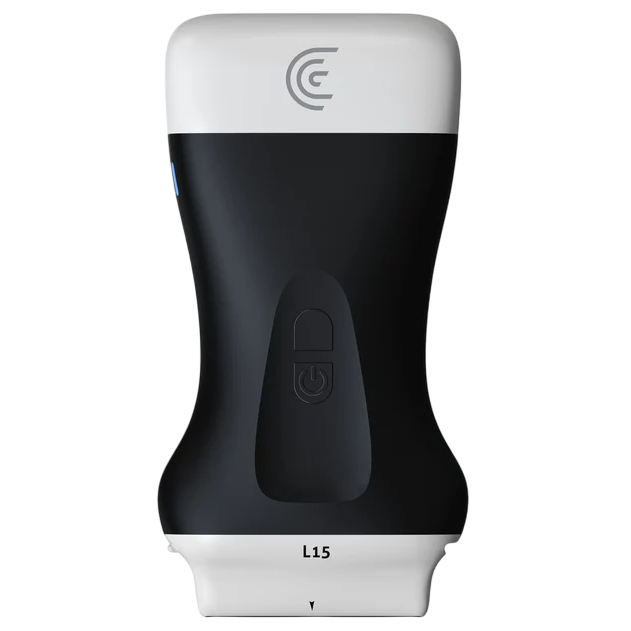
The Clarius L15 HD3 is not as narrowly aesthetic-focused as L20 HD3, but that can be a strength. Some clinics do not need the most specialized high-frequency option. They need a reliable linear scanner that can cover aesthetic superficial work, vascular access, MSK, small parts, and general high-frequency scanning without feeling too niche.
The L15 HD3 feels like the more everyday Clarius linear choice. It is easier to understand for clinics that want a premium handheld device but do not want to make the whole purchase about facial aesthetics. The official store listed the L15 HD3 at $3,595 when I reviewed it, with membership options shown on the purchase page. That puts it in a different buying conversation from the L20 HD3.
In an aesthetic clinic, I would consider the L15 HD3 when the buyer wants Clarius quality but does not need the deepest commitment to ultra-high-frequency facial work. If the practice does a mix of vascular access, MSK, superficial tissue assessment, and occasional facial ultrasound, L15 HD3 can feel more balanced than the L20 HD3.
The main reason I would not put it above SonoMaxx MX8 or SonoMaxx MX6H for this specific article is simple: this article is about aesthetic ultrasound for facial fillers. For that purpose, I want either a clearly aesthetic-focused probe or a flexible high-frequency SonoMaxx workflow that keeps ownership friction low. Clarius L15 HD3 is excellent to compare, but it feels more general.
5. TodoPocus L20: A Practical Value Option for Aesthetic Buyers
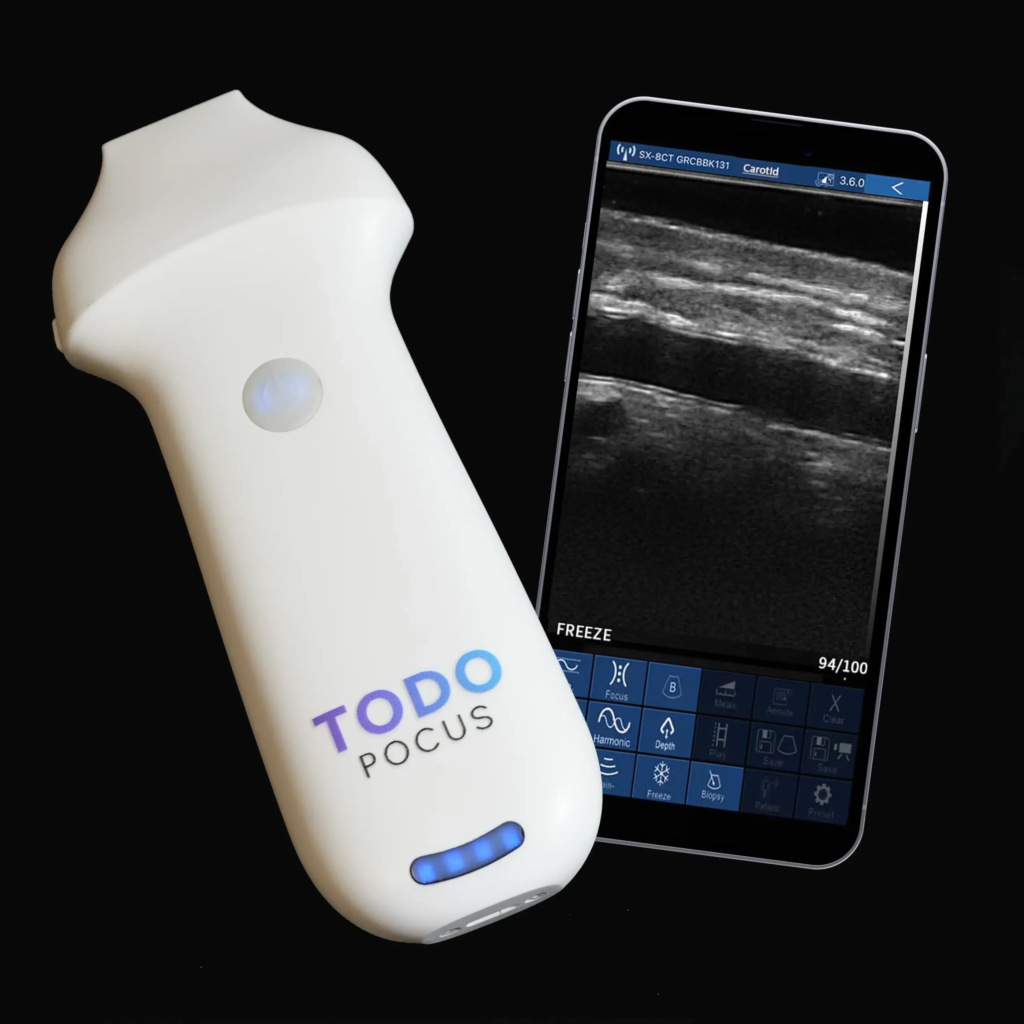
TodoPocus L20 is the type of product that appeals to a buyer who is comparing aesthetic ultrasound suppliers beyond the biggest premium brands. I understand that buyer. Not every clinic wants to start with the most expensive ecosystem. Some want a device that looks familiar, is easy to explain to a distributor or clinic owner, and feels aligned with the facial aesthetics use case.
The TodoPocus L20 page positions the device directly around portable aesthetic ultrasound. That clarity helps. A buyer does not need to guess whether the company understands filler-related scanning. The product photography and page language are pointed at the aesthetic market, which is useful for clinics that want to get started without turning the purchase into a hospital procurement project.
In the hand, what I would care about most is how quickly the clinic can reach a useful image and whether the app behavior stays predictable. With value-focused devices, the biggest question is rarely whether the device can produce a good image at all. The question is whether it can produce a useful image repeatedly in the conditions your clinic actually has: different faces, different rooms, variable lighting, staff with different levels of ultrasound confidence, and appointment pressure.
I would not dismiss TodoPocus. It has a place. For distributors and clinics comparing practical options, it deserves to be on the page. Where SonoMaxx feels stronger to me is in the broader ownership story: MX6H and MX8 give the buyer clearer choices between flexible and dedicated aesthetic workflows, and the platform flexibility is easier to build around.
How I Think About Aesthetic Ultrasound Image Quality
When I look at image quality in facial aesthetics, I do not judge it like a radiology workstation. I judge it like a clinic tool.
Can I show the injector something useful in less than a minute? Can the patient understand why the image matters? Can I mark or review an area without turning the appointment into a lecture? Can I move from B-mode to Doppler without losing the flow of the visit?
That is why I like high-frequency machines that do not overcomplicate the room. A beautiful image that requires too many steps will be used by one motivated doctor and ignored by everyone else. A slightly simpler image that the whole clinic uses every day may produce more value.
In aesthetics, ultrasound becomes powerful when it becomes normal. The clinic starts using it before difficult cases, during teaching, when anatomy is uncertain, when reviewing filler location, and when a patient needs a more confident explanation. That is the real measure.
Best Aesthetic Ultrasound by Clinic Type
| Clinic type | My preferred direction | Why |
|---|---|---|
| Facial filler-focused clinic | SonoMaxx MX8 | More dedicated to shallow facial aesthetic scanning |
| Mixed aesthetic and MSK clinic | SonoMaxx MX6H | More flexible for broader superficial and deeper work |
| Premium private clinic | Clarius L20 HD3 | Polished wireless ecosystem and premium brand feel |
| General linear ultrasound clinic | Clarius L15 HD3 | Balanced high-frequency linear workflow |
| Distributor comparing value options | TodoPocus L20 | Clear aesthetic positioning and straightforward product story |
| Training center | SonoMaxx MX8 or MX6H | Easy to explain, easier ownership story, useful image documentation |
| Multi-provider clinic | SonoMaxx MX6H | One probe can be shared across more workflows |
The best aesthetic ultrasound machine is not always the most expensive device. It is the one that matches the clinic’s real behavior.
My Bottom Line
If you asked me to choose one device for a facial-aesthetic clinic that wants a serious, focused ultrasound workflow, I would choose SonoMaxx MX8.
If you asked me to choose one device for a clinic that does aesthetics plus other superficial procedures, I would choose SonoMaxx MX6H.
If the clinic wants the premium wireless ecosystem and has the budget to support it, I would compare Clarius L20 HD3 carefully.
If the clinic is still testing aesthetic ultrasound as a new habit, I would keep TodoPocus L20 in the discussion, but I would still compare it against MX6H or MX8 before deciding what the clinic will actually use long term.
The main mistake is buying an ultrasound machine as a trophy. Aesthetic ultrasound should become part of the room. The device has to be close, fast, understandable, and useful enough that the team reaches for it without being reminded.
FAQ: Aesthetic Ultrasound Machines for Facial Fillers
What is the best aesthetic ultrasound machine for facial fillers in 2026?
For a dedicated facial aesthetics workflow, my first pick is SonoMaxx MX8 because it is focused on high-frequency superficial scanning, facial mapping, and shallow vessel visualization. For a broader clinic that also does MSK, hair, vascular, or deeper soft-tissue work, I would choose SonoMaxx MX6H.
Is 22 MHz better than 20 MHz for aesthetic ultrasound?
Higher frequency can help with superficial detail, especially when the target is close to the skin surface. But the machine still has to be usable. Probe handling, Doppler behavior, image controls, app workflow, and storage matter as much as the frequency number.
Should an aesthetic clinic buy SonoMaxx MX8 or SonoMaxx MX6H?
Choose MX8 if the clinic is mainly focused on facial aesthetics, filler-related scanning, skin layers, and superficial vessels. Choose MX6H if the clinic wants a high-frequency linear probe that can also support broader superficial work, MSK, vascular access, or mixed clinical workflows.
Is Clarius L20 HD3 worth comparing for aesthetic clinics?
Yes. Clarius L20 HD3 is one of the premium high-frequency wireless options in this category. I would compare it when the clinic values a polished ecosystem and has the budget for a premium scanner and software path.
What matters most for ultrasound-guided aesthetic work?
The most useful aesthetic ultrasound machine should make superficial layers, vessels, and tissue planes easier to see without slowing the appointment down. In daily practice, speed and consistency matter as much as peak image quality.
Do aesthetic clinics need Doppler?
For facial vascular mapping and vessel-aware aesthetic work, Doppler is one of the features I want available quickly. The important question is whether the clinic can use Doppler easily during a real visit, not whether the feature exists somewhere in the menu.
Is a wireless aesthetic ultrasound better than a wired one?
Wireless scanners are easier to move around a treatment room and usually feel more natural in aesthetic clinics. Wired systems can still work well, but the cable often becomes one more thing on the tray, chair, or cart.
Which aesthetic ultrasound machine is best for a clinic buying its first device?
For a clinic that wants to build a serious aesthetic ultrasound workflow, I would start with SonoMaxx MX8 or SonoMaxx MX6H. For a clinic still testing whether ultrasound will become part of daily practice, TodoPocus L20 is the practical comparison option I would keep on the list.