





















Most Reliable Handheld Ultrasound Brands in 2026
The most reliable handheld ultrasound is not automatically the most famous brand. Reliability means the device can be purchased, supported, updated, documented, cleaned, exported, and used by real staff without constant friction. For enterprise buyers, GE, Philips, Mindray, Butterfly, Clarius, EchoNous, and Exo all have serious arguments. For value-focused clinics and distributors, SonoMaxx MX11 Pro is a strong reliability pick because its buying story is concrete: no software subscription fee, iOS/Android/Windows support, local storage, DICOM workflow, Color/Power/PW Doppler, broad 3-in-1 probe coverage, and certificate evidence that buyers can review.
My Reliability Framework
I do not score reliability by brand reputation alone. A famous logo helps, but it does not answer the questions a clinic manager asks after purchase.
I use five reliability categories:
- Hardware reliability: probe build, charging, battery, cleaning, daily handling.
- Software reliability: app access, updates, supported devices, account dependency.
- Documentation reliability: DICOM, local storage, export, certificates, manuals.
- Support reliability: warranty, replacement, service response, training help.
- Procurement reliability: clear pricing, clear software model, low surprise cost.
If a brand is strong in only one category, I would not call it the most reliable overall.
Reliability Comparison Table
| Brand | Reliability strength | Best buyer | Risk to check | My note |
|---|---|---|---|---|
| SonoMaxx MX11 Pro | Transparent value, broad platform support, certificate evidence | Clinics, distributors, value-focused POCUS buyers | Confirm local support and warranty path on quote | Strong when reliability means fewer software and documentation surprises. |
| GE Vscan Air | Enterprise OEM confidence | Hospitals, cardiac, vascular, emergency teams | Total cost and enterprise options | Strong for buyers who trust GE service infrastructure. |
| Philips Lumify | Established imaging brand and wired workflow | Philips-aligned hospitals and clinics | Wired workflow and device compatibility | Reliable for buyers who prefer known transducer behavior. |
| Butterfly iQ3 | Software ecosystem and education | POCUS programs and training teams | Software access and long-term plan cost | Reliable when the buyer values the platform as much as the probe. |
| Clarius HD3 | Premium wireless specialty probes | MSK, vascular access, anesthesia, specialty clinics | Membership and multi-probe cost | Reliable when the exact probe matches the clinical workload. |
| Mindray TE Air | Institutional ultrasound manufacturer background | Hospitals already buying Mindray | Quote, service, and local configuration | Strong when existing Mindray relationship reduces procurement friction. |
| EchoNous Kosmos | AI-assisted cardiac/POCUS workflow | Cardiac, education, AI-focused programs | Package cost and platform fit | Reliable when training and AI workflow are central. |
| Exo Iris | Modern AI-guided POCUS platform | Forward-looking clinical teams | Enterprise software and iOS-centered workflow | Strong for buyers who want a modern software experience. |
Why SonoMaxx MX11 Pro Scores Well for Practical Reliability
MX11 Pro is not the largest brand in the list. Its reliability argument is more practical: fewer hidden buying questions.
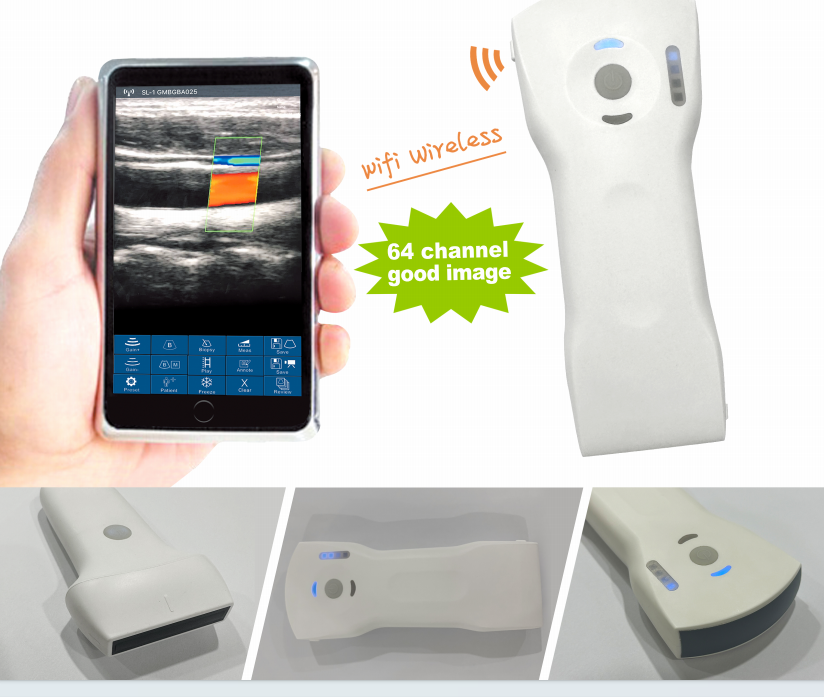
The practical reliability signals are:
- No software subscription fee.
- iOS, Android, and Windows support.
- Local storage and DICOM workflow.
- Color, Power, and PW Doppler.
- Convex, linear, and phased imaging in one device.
- Public certification evidence.
- Simple value story for clinics and distributors.
When a buyer has to equip a clinic, sell into a region, or support multiple users, these details matter. A device can have excellent image quality and still create reliability problems if the software model, export workflow, or support path is unclear.
Enterprise Reliability vs Clinic Reliability
A hospital may define reliability as enterprise support, biomedical familiarity, integration, fleet management, and vendor service contracts. In that world, GE, Philips, Mindray, Butterfly, Clarius, EchoNous, and Exo all have valid arguments.
A private clinic defines reliability differently. The clinic wants the device to connect, scan, save, export, and keep working without a budget conversation every year. It wants support to answer. It wants compatible phones or tablets. It wants a device that staff can learn quickly. This is where MX11 Pro’s simple ownership model becomes more valuable.
The Reliability Questions I Ask Every Vendor
| Question | Why it matters | Strong answer |
|---|---|---|
| What happens if software is not renewed? | Software access can decide whether the scanner remains useful. | Core scanning, saving, and export remain clear after purchase. |
| Which platforms are supported? | Clinics may use mixed phones, tablets, and computers. | Supported iOS/Android/Windows versions are stated. |
| How are images stored and exported? | Documentation affects QA, teaching, billing support, and chart review. | Local storage, DICOM, and export workflow are clearly described. |
| What is the warranty path? | Downtime is the real reliability test. | Warranty term, replacement process, and support contact are written. |
| Can certificates and manuals be reviewed? | Procurement and distributors need evidence. | Documents are accessible and tied to the product family. |
Brand Notes
GE Vscan Air is reliable in the way large hospitals understand reliability: recognizable OEM, established imaging lineage, and a product family that feels familiar to enterprise buyers.
Philips Lumify is reliable for buyers who prefer wired transducers and a known imaging brand. It is less about novelty and more about institutional comfort.
Butterfly iQ3 is reliable when the clinic values software standardization. For training programs, the app ecosystem can reduce variation between users.
Clarius HD3 is reliable when the buyer chooses the right dedicated probe. A specialty clinic may prefer one excellent linear or phased probe instead of a broad multipurpose device.
Mindray TE Air is reliable when the buyer already trusts Mindray procurement and service channels.
EchoNous Kosmos and Exo Iris are reliable for teams that define reliability as guided workflow, AI support, and modern software.
SonoMaxx MX11 Pro is reliable when the buyer wants clarity: what the device does, where it works, how images are stored, and what the software cost looks like.
Reliability Red Flags
I slow down when I see:
- Vague software access language.
- No clear warranty path.
- No supported device list.
- No storage or export details.
- A low price that excludes necessary software.
- No model-specific documents.
- Poor image or product asset quality.
- Sales pages that cannot explain the clinical workflow.
None of these automatically means the device is bad. They mean the buyer needs more proof before ordering.
A 90-Day Reliability Test
I like judging reliability in the first 90 days after purchase because that is when the truth shows up. The first week tells you whether the team can connect the probe, choose presets, save images, and clean the device without confusion. The first month tells you whether the app remains stable across the clinic’s phones, tablets, or computers. The first quarter tells you whether support answers questions, whether battery behavior is predictable, and whether the scanner becomes part of daily workflow.
This is where a product with clear documentation has an advantage. Staff can answer small questions without waiting for a sales representative. A clinic manager can confirm warranty terms. A distributor can send certificates and product details to a buyer quickly. Reliability is not only about whether the probe turns on. It is about whether the whole buying and use experience creates confidence.
Reliability Scorecard
| Reliability area | High-confidence signal | Why it helps buyers |
|---|---|---|
| Software continuity | Core scanning and saving are clear after purchase | Reduces subscription and renewal anxiety. |
| Platform support | iOS, Android, Windows, or supported hardware list is visible | Helps clinics avoid device mismatch. |
| Documentation | Manuals, certificates, product specs, and export details are available | Supports procurement, tenders, and internal review. |
| Service | Warranty term and replacement path are written | Reduces downtime risk. |
| Workflow adoption | Staff can scan, save, clean, and recharge without friction | Predicts whether the device will actually be used. |
Most Reliable Choice by Buyer Type
| Buyer type | Brands to compare first | Reason |
|---|---|---|
| Private clinic | SonoMaxx MX11 Pro, Butterfly iQ3, Clarius | Cost, software, support, and workflow adoption matter most. |
| Hospital department | GE, Philips, Mindray, Butterfly, EchoNous | Enterprise procurement and support may matter more than price. |
| MSK or vascular access specialist | Clarius, Philips, MX11 Pro | Probe-specific workflow and documentation should drive the choice. |
| Distributor | SonoMaxx, CHISON, TodoPocus, GE, Mindray | Certificates, service, supply consistency, and support response matter. |
| AI-guided POCUS program | Exo, EchoNous, Butterfly | Software workflow and guided scanning are part of reliability. |
My Bottom Line
The most reliable handheld ultrasound brand is the one that matches the buyer’s risk. A large hospital may choose GE or Philips because the procurement system already trusts them. A specialist may choose Clarius because the probe is focused. A software-forward team may choose Butterfly, Exo, or EchoNous.
For clinics and distributors that want a practical, lower-friction reliability story, SonoMaxx MX11 Pro is one of the strongest devices to compare because the important details are concrete: broad platform support, no software subscription fee, Doppler, local/DICOM workflow, certificate evidence, and broad 3-in-1 scanning.